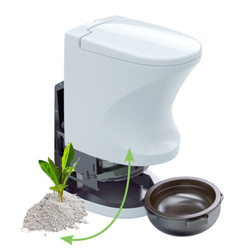
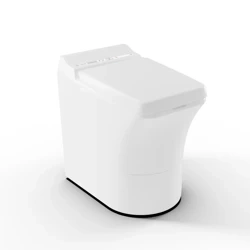
Incinerating toilet: how it works, test and Cinderella models compared

An incinerating toilet needs no water, no septic tank, no sewer connection and no chemicals. It burns urine and waste at around 500 to 600 °C, leaving only a small amount of ash after each visit. That makes it a good fit for cabins, summer houses, allotments, motorhomes, boats and anywhere a septic tank or sewer connection is impossible or not worth the cost. In this guide we explain how an incinerating toilet works, what to look for when choosing one and what the Testfakta laboratory test found. Finally, we compare the Cinderella models that run on electricity, gas and diesel.
You will find all models, installation kits and spare parts in our Incinerating toilets category.
How an incinerating toilet works
The principle is simple and works the same way in every Cinderella model, whatever the energy source:
- 1Before each use you place a new bowl liner in the bowl.
- 2You use the toilet like a normal one, close the lid and press the flush button.
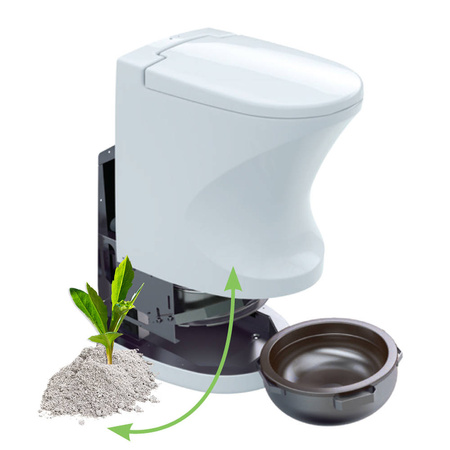
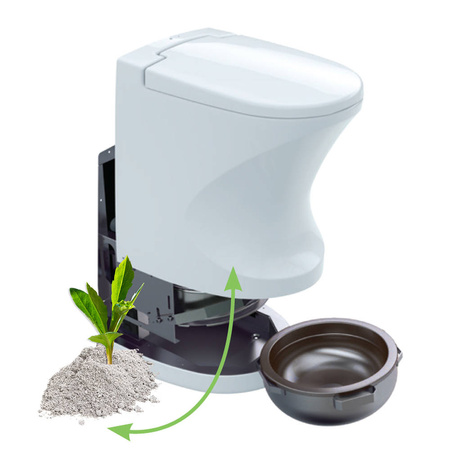
- 3The liner and its contents drop into the combustion chamber. Liquid evaporates and the rest burns to ash. A fan removes the exhaust through the flue pipe.
- 4The toilet is ready for the next visit straight away, and the ash collects in a pan under the chamber.
There really is very little ash. According to the manufacturer, four people using the toilet for a week produce about one cup of ash. The pan is usually emptied once a week or when the display asks for it.
Where it makes sense
- ✓Cabins and homes without a sewer or septic tank.
- ✓Gardens and garden sheds with no water supply.
- ✓Motorhomes, caravans, boats and houseboats, when you don't want to hunt for a dump station.
- ✓Environmentally sensitive areas, because no waste has to be taken away.
What to look for when choosing
Incinerating toilets look alike, but they differ in energy source, capacity and above all safety. Check these points before you buy:
Energy source
230 V mains for buildings with a grid connection, or propane-butane or diesel with a 12 V system where there is no grid.
Number of users
Cinderella models for buildings are designed for up to 12 people, the Travel models for motorhomes for smaller groups.
Where the air comes from
A toilet that draws air from the room pulls heated air out of the house. In winter that is a real cost.
Safety features
Incineration should not start without the ash pan or with the hatch open. Live parts should also be out of reach.
Ventilation and installation
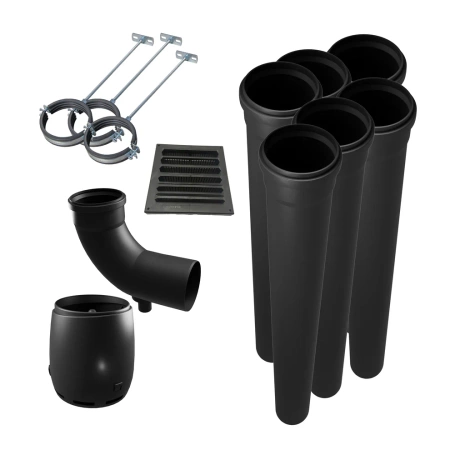
Every incinerating toilet needs an air inlet and an outlet. The installation kit is often sold separately.
Running costs
What counts is energy or fuel use per cycle and the price of original bowl liners.
Tip:Capacity given in visits per hour tells you how the toilet copes with a queue, for example in the morning in a cabin full of guests.
Testfakta test: five electric incinerating toilets
In 2018 the Swedish organisation Testfakta Research compared five electric incinerating toilets sold in the Nordic market. The testing was carried out by RISE (Research Institutes of Sweden). The test was commissioned by Cinderella, the toilet manufacturer, which is worth knowing when you read the results. Each lab "flush" was 150 g of synthetic faeces, 250 ml of synthetic urine and 10 g of paper. The toilets were tested with 1, 3 and 6 flushes in a row, and safety, installation and ease of use were also rated.
Key findings
- ✓Cinderella Comfort won the test with a score of 4.5 out of 5. It burned fastest, used less energy than the other models that burned everything to ash, and had no serious safety remarks.
- ✓Only three models burned everything to ash at 3 and 6 flushes: Cinderella Comfort, Separett Flame 8000 and Separett Cindi Family. Incinolet and Sunwind left a lot of unburned residue.
- ✓Only Cinderella takes its air from outside. The other models draw heated air from the room, up to 157 m³ for a single flush, roughly the volume of a 50 m² cabin.
- ✓Only Cinderella blocks incineration without the ash pan and with the chamber hatch not fully closed. In the other models incineration could start anyway.
Results in numbers
| Feature | Cinderella Comfort | Separett Flame 8000 | Separett Cindi Family | Incinolet TR 1800 | Sunwind El-dorado |
|---|---|---|---|---|---|
| Power (W) | 2,000 | 1,800 | 1,800 | 1,800 | 2,200 |
| Stated capacity | up to 12 people | up to 6 people | up to 6 people | 4 to 6 people | 12 visits per day |
| Empty ash pan indicator | yes | no | no | no | no |
| Flush | button | lever and button | lever and button | pedal and button | button |
| Lab results | |||||
| Burn time 1 / 3 / 6 flushes (h:min) | 0:56 / 2:12 / 3:24 | 1:09 / 3:30 / 5:59 | 1:09 / 3:31 / 4:02 | 1:16 / 1:40 / 1:44 | 1:00 / 1:23 / 1:27 |
| Energy use 1 / 3 / 6 flushes (kWh) | 1.41 / 2.72 / 4.02 | 1.60 / 4.22 / 6.99 | 1.90 / 4.01 / 5.04 | 1.42 / 2.01 / 2.38 | 1.55 / 2.28 / 2.42 |
| Residue 1 / 3 / 6 flushes (g) | 17 / 49 / 101 | 17 / 47 / 92 | 15 / 46 / 119 | 17 / 217 / 1,110 | 17 / 232 / 1,230 |
| Incineration result | ash only | ash only | ash only | unburned residue at higher load | unburned residue at higher load |
| Air per flush (m³) | 84 (outside air) | 122 (room air) | 83 (room air) | 157 (room air) | 157 (room air) |
| Access to live parts | no | yes, in the ash compartment | yes, in the ash compartment | no | no |
| Starts without ash pan | no | yes | yes | yes | yes |
| Starts with hatch not closed | no | yes | yes | yes | yes |
| Risk of fumes indoors after a power cut | no (battery) | no (battery) | no (battery) | yes (no battery) | yes (no battery) |
| Emptying the ash pan | easy, no tools | easy, with tools | easy, with tools | fairly easy, no tools | difficult |
| Score from 1 to 5 (5 is best), weighting in brackets | |||||
| Capacity and performance (40%) | 4.7 | 4.0 | 3.9 | 3.7 | 3.7 |
| Safety (25%) | 4.8 | 2.3 | 2.4 | 2.9 | 3.0 |
| Installation and use (25%) | 3.9 | 3.5 | 3.6 | 3.5 | 3.3 |
| Build quality (10%) | 4.0 | 4.0 | 4.0 | 3.0 | 3.0 |
| Overall score | 4.5 | 3.5 | 3.5 | 3.4 | 3.3 |
Source: Testfakta Research, laboratory test published on 16 March 2018. The results refer to the model versions of that time. According to RISE, heating 100 m³ of air from -10 to +15 °C takes about 0.8 kWh, so toilets that draw room air use more energy in winter than the table alone shows.
Cinderella models: which one to choose
Cinderella is a Norwegian brand and the toilets are made in Norway. The range includes electric models for buildings, a gas model for off-grid cabins and the Travel models for vehicles and boats.
| Model | Classic | Comfort | Premium | Freedom | Travel Gas | Travel Diesel |
|---|---|---|---|---|---|---|
| Power | 230 V, 10 A | 230 V, 10 A | 230 V, 10 A | LPG and 12 V | propane-butane 30 mbar and 12 V | diesel or HVO100 and 12 V |
| Use per cycle | 1 to 2 kWh | 1 to 2 kWh | 1 to 2 kWh | 160 to 190 g of gas | 140 to 180 g of gas | 100 to 250 ml of diesel |
| Capacity | 3 to 4 visits per hour, up to 12 people | 3 to 4 visits per hour, up to 12 people | up to 4 visits per hour | 3 to 4 visits per hour, up to 12 people | up to 6 people | up to 4 visits per hour |
| Weight | 34 kg | 34 kg | 33 kg | 34 kg | 20 kg | 20 kg |
| Highlight | simple to use, empty ash pan indicator | LCD display with notifications | large display with menu, cycle counter, Teflon coated bowl, soft-close lid | no 230 V grid needed, LCD display | for vehicles, you can drive during incineration | fuel from the vehicle tank, no gas bottle |
| Best for | cabin with mains power | cabin with mains power | cabin with mains power | off-grid cabin | motorhome, caravan, boat | motorhome, boat, houseboat |
For homes and cabins with 230 V
Classic and Comfort have the same 2000 W incineration power and a capacity of up to 12 people. Comfort adds an LCD display with notifications and is designed for cold climates. Premium is the newest model, built on the same technology as Comfort. It has a large display with menu, a cycle counter (warning after 70, lock after 90 cycles), a steam cleaning program for the catalyst, a Teflon coated bowl and a soft-close lid. It works at ambient temperatures from -20 to 40 °C and is rated IP 34.

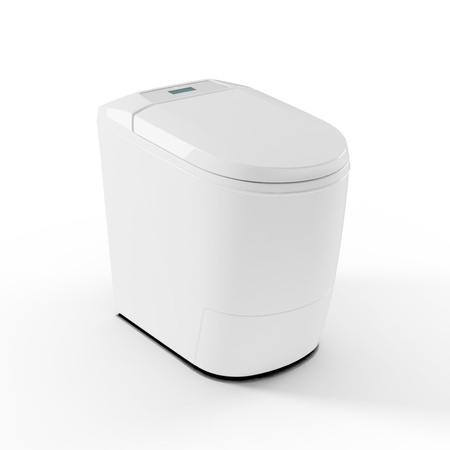
For cabins without a 230 V grid
Freedom burns LPG, while its electronics run on 12 V. That makes it suitable for cabins without a 230 V grid, for example with a battery powered 12 V system. Dimensions, capacity and the LCD display are the same as on the Comfort.

For motorhomes, caravans and boats
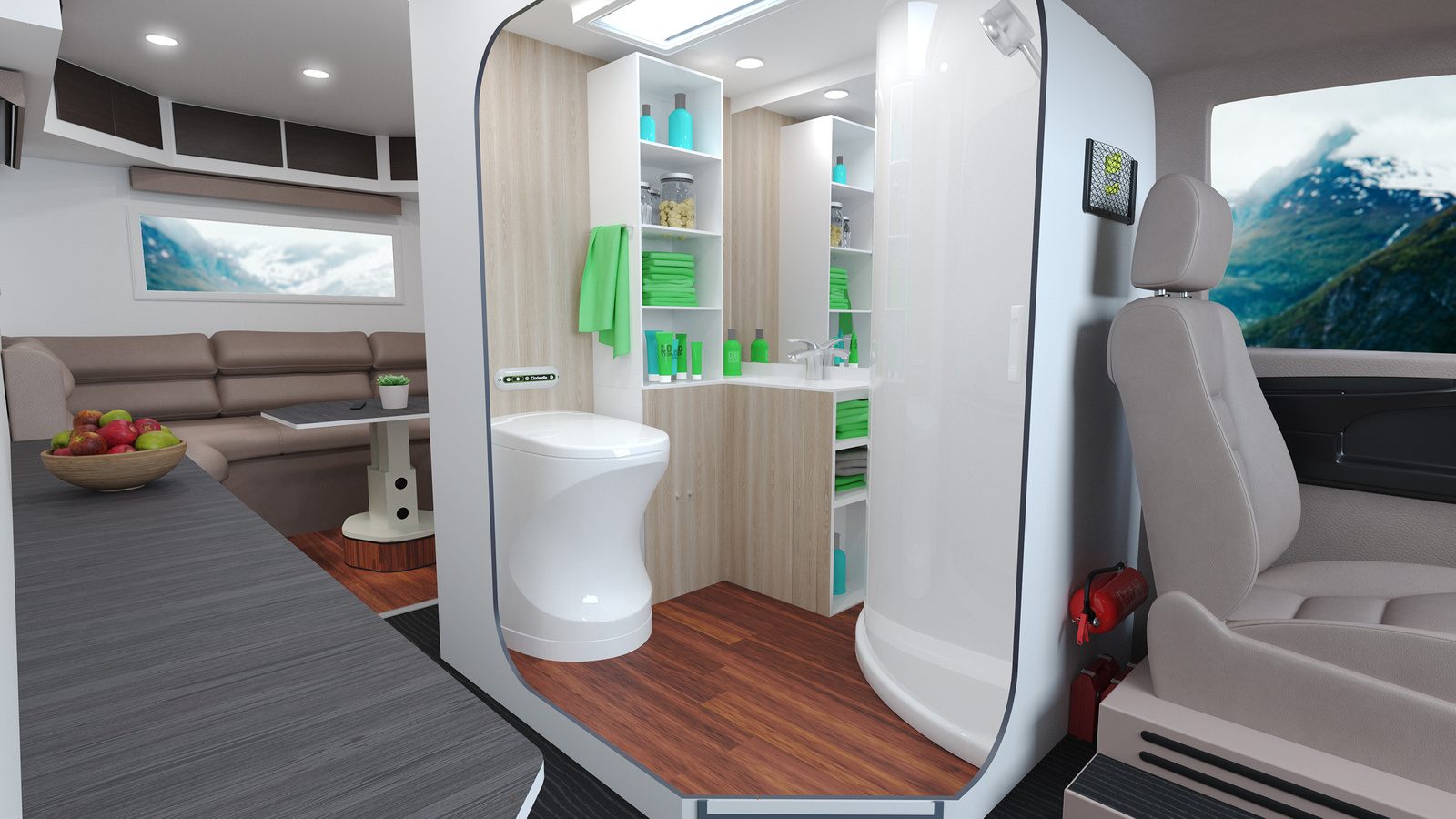
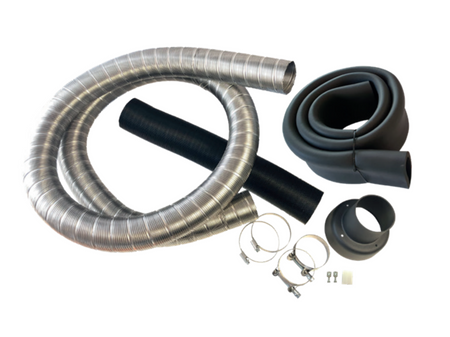
Travel Gas burns propane-butane at 30 mbar and Travel Diesel runs on diesel or HVO100 drawn from the vehicle tank. Both need only a 12 V supply, weigh about 20 kg and, according to the manufacturer, let you drive while they incinerate. A winter flue extension is included to keep snow out of the outlet. Travel Diesel works up to 1500 m above sea level.
Installation and everyday use
An incinerating toilet needs no tanks or water supply, but it does need proper ventilation. Performance, lifespan and warranty all depend on it, so install it exactly as the manufacturer's instructions describe.
- ✓Models for buildings (Classic, Comfort, Premium, Freedom) need 110 mm ventilation pipes for the air inlet and outlet. The electric models need a 230 V supply on a 10 A fuse, and Premium needs its own earthed circuit.
- ✓The Travel models mount on a wall installation module. The exhaust is a 60 mm hose up to 250 cm long and the air inlet a 75 mm hose up to 120 cm.
- ✓A gas installation in a vehicle may require a certified installer, as the rules vary from country to country.
- ✓The installation kit with pipes and ventilation parts is usually bought separately. Premium uses the same kit as Comfort.
Bowl liners and ash
Each use needs an original bowl liner. It carries the contents into the combustion chamber and keeps the bowl clean. According to the manufacturer the ash is free of bacteria and can usually go in household waste, but check your local rules.




Incinerating or separating toilet
An incinerating toilet is the most convenient option: apart from the ash once a week there is nothing to empty, and at home it works almost like a normal WC. In return it needs a fair amount of energy or fuel, a flue and a bigger budget. A separating toilet is cheaper, lighter and needs no power, but the urine tank and solids container have to be emptied regularly.
If you are considering a cheaper solution for a campervan or weekend trips, read our guide Separating and composting toilets: how they work, types and how to use them.
FAQ
Looking for a toilet without water or sewer for a cabin, motorhome or boat? You will find all Cinderella models, installation kits, liners and spare parts in one category.