


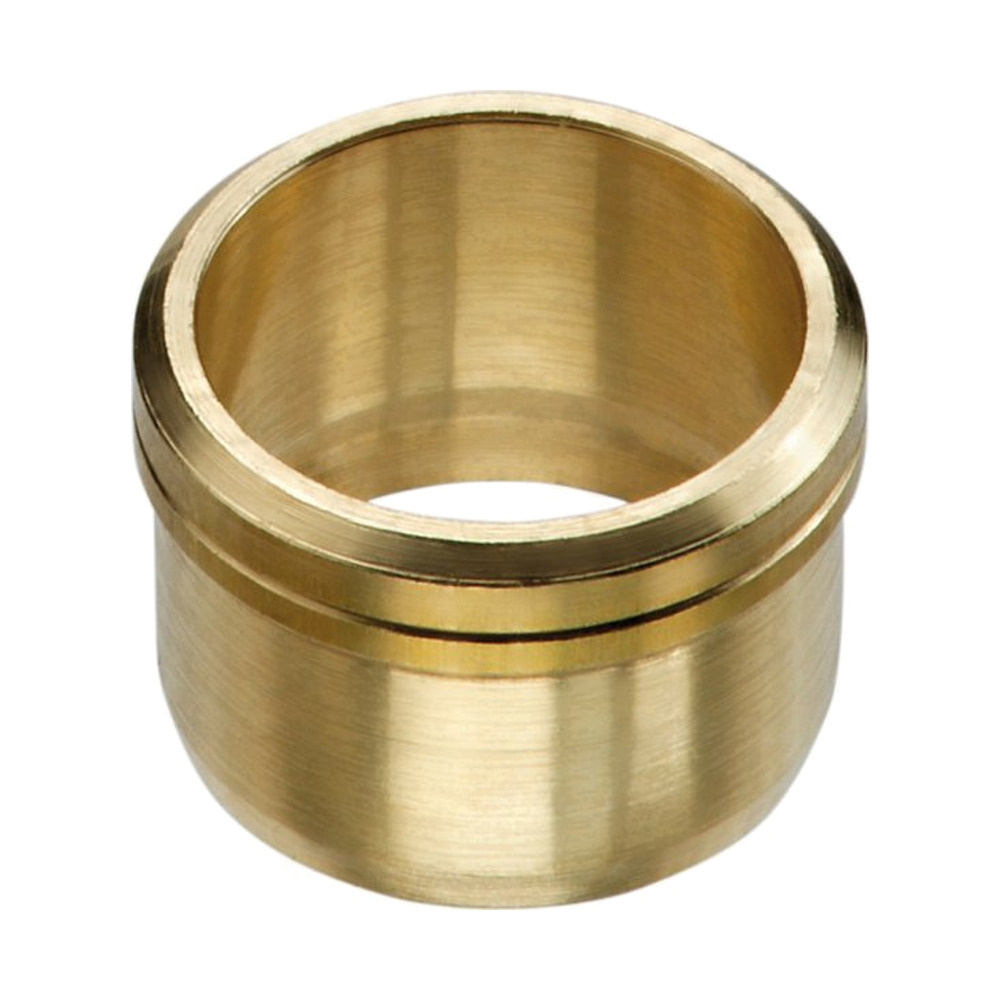

GOK cutting ring type D-MS 8 mm, brass, form A-MS - for copper pipe in a cutting-ring fitting
- GOK cutting ring type D-MS for 8 mm pipe, form A-MS according to DIN 3861, series L. Intended among other uses for fitting copper pipe in a cutting-ring joint.
This brass cutting ring type D-MS from GOK is made for fittings on pipe with an outside diameter of 8 mm. It has form A-MS according to DIN 3861 and belongs to series L. GOK states that it is used, for example, when installing copper pipe. The material is brass, given by GOK as CW614N or CW617N. As you tighten the nut, the cutting edge bites into the pipe and seals the joint in the cone of the fitting body. The ring is part of a fitting; it does not work on its own.
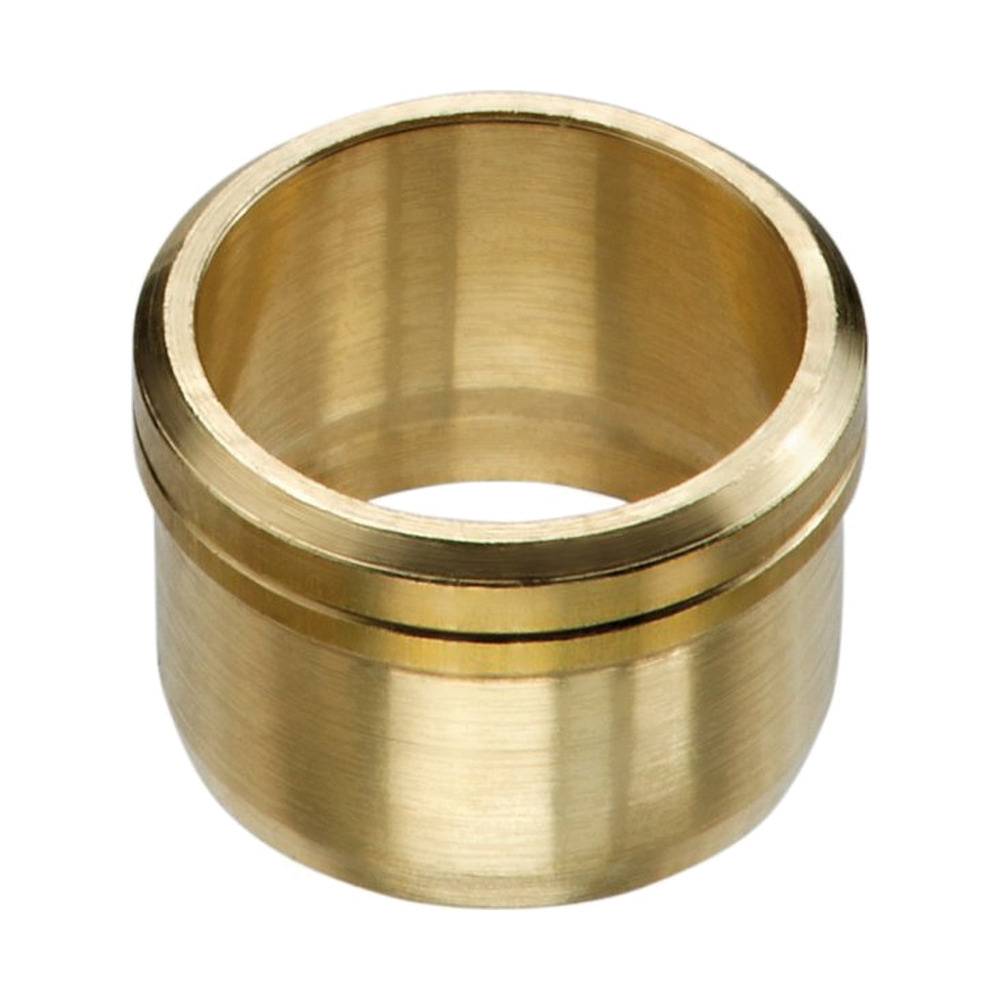
Key features
- cutting ring type D-MS from GOK
- for pipe with an outside diameter of 8 mm
- series L
- form A-MS according to DIN 3861
- material: brass CW614N or CW617N
- intended among other uses for installing copper pipe
- for cutting-ring fittings according to EN ISO 8434-1
What this ring is for
The type D-MS ring bites into the pipe when you tighten the fitting nut. That lets you join smooth pipe without a thread on the pipe end and without soldering. It fits series L fittings for 8 mm pipe, for example the straight type G-MS fitting with RVS 8 x RVS 8 connections (straight fitting type G-MS RVS 8 x RVS 8), which according to GOK is supplied with a type D-MS ring and a type M-MS nut.
You can buy it as a spare after a joint has been opened, if the ring is damaged, deformed or was fitted the wrong way round. A complete joint also needs a type M-MS nut for 8 mm (coupling nut type M-MS 8 mm) and the fitting body. With copper or aluminium pipe GOK requires a reinforcing sleeve. For 8 x 1 mm copper pipe that is the brass type VSH-MS sleeve (reinforcing sleeve type VSH-MS AD 8 x 1). For aluminium pipe use a steel sleeve, not a brass one.
This is the brass type D-MS variant, not the steel type D ring. Type D-MS is indicated among other uses for copper pipe. Match the ring to the pipe and fitting material, following the GOK installation instructions.
How it is built and how it works
The ring is a cutting ring of form A-MS according to DIN 3861. It has a cutting edge that must face the pipe end during assembly. The wrong position means an incorrect assembly and a poor bite into the pipe.
The seal is made only in the complete joint: the pipe, a reinforcing sleeve if required, the ring, the nut and the cone of the fitting body. The ring is not a flat gasket and does not replace the reinforcing sleeve.
GOK does not publish a numerical working pressure on this ring page. The maximum permitted working pressure is given in the cutting-ring fitting data sheet. According to GOK, cutting-ring fittings have a DVGW type-examination certificate to DIN 3387-1, which covers joints in metal gas pipes, for example in the scope of the TRF.
How to fit it
- Work on a gas system only after the pressure has been fully released and in line with the rules that apply, for example the TRF. If you are not qualified to do this work, have a competent person fit the joint.
- Cut the pipe square. GOK does not allow a pipe cutter or an angle grinder. Lightly deburr the ends inside and outside, then clean them.
- If the pipe is thin-walled or made of a soft material, such as copper or aluminium, drive a reinforcing sleeve into the pipe up to the knurled rim, using a plastic or rubber hammer. For aluminium pipe use a steel sleeve.
- Slide the nut onto the pipe first, then the cutting ring, with the cutting edge facing the pipe end.
- Push the pipe fully home into the cone of the fitting body. Tighten the nut by hand until the body, the ring and the nut meet. Then tighten the nut with an open-ended spanner by about 1 and 1/2 turns on first assembly, holding the fitting body with a second spanner. The pipe must not turn. A different tightening method can cause a leak or the pipe to pull out.
- After assembly GOK recommends checking the bite: after you undo the nut, the raised material in front of the forward cutting edge should be even. Then reassemble the joint and test it for tightness as required. Do not reuse a damaged ring or one that has not cut correctly.
What to watch out for
- This is a gas-system part. Escaping gas is flammable. If you smell gas or suspect a leak, shut off the gas supply at once.
- Undo or tighten the fitting only after the pressure has been fully released.
- With copper or aluminium pipe always use a reinforcing sleeve. For aluminium use only a steel sleeve, not a brass one.
- Do not invent a working pressure. Use the value from the cutting-ring fitting data sheet and the limits of the rest of the system.
- The cutting edge must face the pipe end. A ring fitted the wrong way round will not cut the pipe correctly.
Care
Before assembly, check that the cutting edge is not chipped and that the ring is not deformed or dirty. Do not use a damaged ring. Store it in a dry place. After you open a joint, judge whether the ring can be used again. If the bite is uneven, or the ring can move along the pipe in a way the instructions do not allow, replace it before you reassemble the joint.
Technical data
| Feature | Value |
|---|---|
| Type | cutting ring type D-MS |
| Brand | GOK |
| Pipe diameter (connection A) | 8 mm |
| Series | L |
| Form | A-MS according to DIN 3861 |
| Material | brass CW614N or CW617N |
| Working pressure | according to the cutting-ring fitting data sheet; no separate figure on this ring page |
| Use | cutting-ring fittings, including copper pipe in a gas system |
Frequently asked questions
Which pipe does this ring fit?
Pipe with an outside diameter of 8 mm in a series L fitting. GOK gives copper-pipe installation as an example of its use.
What does form A-MS mean?
It is the ring form according to DIN 3861. A-MS refers to the brass cutting ring type D-MS.
What is it made of?
Brass. In the GOK documentation the material is given as CW614N or CW617N.
Is the ring enough for copper pipe?
No. You also need a type M-MS nut, the fitting body and a reinforcing sleeve. For 8 x 1 mm copper pipe that is the brass type VSH-MS sleeve.
How should the ring sit on the pipe?
The nut goes on first, then the ring, with the cutting edge facing the pipe end. The pipe is then pushed fully home into the cone of the fitting body.
What working pressure is allowed?
GOK does not give a figure on this ring page. The maximum permitted working pressure is the one in the technical data for cutting-ring fittings.